
Land Survey for Fence Permits in Hialeah: What Homeowners Should Check First
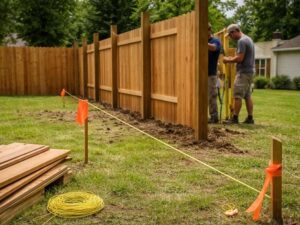
A fence seems simple. Pick a style, pull a permit, start digging. But in Hialeah, skipping a land survey before that first post goes in the ground can cost you far more than the fence itself. Property line disputes, failed inspections, and forced removals are real outcomes for homeowners who assumed they knew where their lot ended.
This guide walks developers and property owners through what to check before submitting a fence permit application.
Why a Land Survey Matters Before Installing a Fence in Hialeah
A land survey for fence permits in Hialeah is not just paperwork. It is the difference between a fence that passes inspection and one that gets flagged for removal.
Hialeah follows Miami-Dade County zoning codes. Those codes require fences to sit within specific distances from property lines. Without a current survey, you are guessing. And guessing on a fence permit wastes money.
What a survey does for your project:
- Confirms exact property boundaries before any digging starts
- Identifies encroachments on or from neighboring lots
- Provides documentation the city may request during permit review
- Gives you legal standing if a neighbor challenges the fence location later
Permit reviewers work from legal descriptions and recorded plats. Your survey needs to match that data. If it does not, the permit stalls.
Property Lines, Easements, and Setback Requirements to Review
Three things can stop a fence before it starts: unclear property lines, unrecorded easements, and setback violations.
Property Lines
Recorded plats show where your lot ends on paper. But the physical ground does not always match old survey markers. Corners shift. Markers get removed. Neighboring fences drift over years.
A licensed surveyor locates your actual corners and marks them. That is the only reliable starting point for fence placement.
Easements
Easements give third parties legal rights to use part of your property. Utility easements are common along rear and side lot lines in Hialeah. A fence built inside an easement area can be ordered removed at your expense, even if the city approved the permit.
Check your title documents. Better yet, have your surveyor flag all recorded easements on the survey drawing.
Setback Requirements
Hialeah zoning sets minimum distances between a fence and the property line, the street, or other structures. These vary by:
- Zoning district (residential, commercial, mixed-use)
- Fence height
- Whether the fence sits in a front, side, or rear yard
A survey does not replace a zoning check. Do both. Confirm setback rules with the city’s building department before your surveyor starts work, so the final drawing reflects the correct placement zone.
Common Mistakes Homeowners Make When Planning a Fence
Most fence permit problems trace back to the same few errors.
Relying on an existing fence as the property line. Neighboring fences are not legal boundaries. They are physical objects that may have been placed incorrectly, and they move over time. A fence that has stood for 20 years can still be two feet inside your neighbor’s lot.
Using old surveys. A survey from a refinance or purchase closing may be years old. If any construction, grading, or neighboring development has happened since then, that survey may no longer reflect current conditions.
Skipping the easement check. Most homeowners do not read their title commitments. Utility easements along the back of a lot are easy to miss. They show up only in recorded documents, not in a visual inspection of the yard.
Assuming the permit covers everything. A permit approval means the city accepted your application. It does not mean the fence location is correct. If your submitted site plan was based on incorrect boundary data, the permit is built on a bad foundation.
Waiting until after construction. Some owners get the fence up and then apply for after-the-fact permits. This approach almost always triggers a survey requirement anyway. It also creates enforcement exposure that a pre-construction survey would have avoided.
Types of Land Surveys Used for Fence Projects
Not every survey fits every project. Some confirm where your lines are. Others mark the ground so crews know exactly where to dig. A few come into play only under specific conditions. Knowing which one your project needs before you hire anyone saves time and avoids going back for additional work mid-permit.
Here are the survey types most relevant to fence projects in Hialeah.
Boundary Survey
This is the most common survey type for fence permits. A licensed surveyor researches the legal description, reviews recorded plats, and physically locates the property corners. The final drawing shows the lot lines, existing structures, and any encroachments.
Most permit applications in Miami-Dade ask for a current boundary survey or survey sketch as part of the submittal package.
Stakeout Survey (or Layout Survey)
After boundaries are confirmed, a stakeout survey places physical markers at specific points along the lot line. This gives fence installers exact ground-level reference points to follow during construction.
Skipping this step is how fences end up two feet off the line.
As-Built Survey
An as-built survey documents what was actually installed after construction. Some municipalities request this as a permit closeout requirement. It confirms the fence was built where the permit said it would be.
Elevation Certificate (Where Applicable)
If the property sits in a flood zone, a fence permit may trigger elevation review. Fences can affect water flow in FEMA-designated flood areas. Check with the building department early if your lot is in or near a flood zone.
How a Survey Helps Prevent Boundary and Neighbor Disputes
Neighbor disputes over fences are one of the most common property conflicts in South Florida. A professional survey does not prevent disagreements. But it gives you documented, legally defensible information when one comes up.
Encroachment prevention. If your fence is built on the correct boundary, an encroachment claim has no standing. The survey drawing becomes your evidence.
Chain of title clarity. Recorded surveys become part of the property’s history. They clarify boundary history for future owners and can resolve conflicting older descriptions.
Dispute resolution without litigation. When neighbors disagree about where a line falls, a fresh boundary survey by a licensed surveyor often resolves the question without involving attorneys or courts.
Contractor accountability. If an installer places a fence incorrectly, a pre-construction survey establishes where the fence was supposed to go. That matters if you need to hold a contractor responsible for relocation costs.
Frequently Asked Questions
Do I need a land survey to get a fence permit in Hialeah?
Miami-Dade County building requirements typically require a site plan or survey sketch showing the property boundaries and proposed fence location. Check with Hialeah’s building department for current submittal requirements before applying.
How recent does my survey need to be?
There is no universal rule, but most reviewers prefer surveys completed within the past five years. If significant site changes have occurred, a fresh survey is the safer choice.
What if my neighbor already has a fence on what I think is my property line?
Do not build off that fence. Have a licensed surveyor locate your actual corners. If an encroachment exists, you will need that documentation to address it properly.
Can I use a survey from when I bought the house?
Sometimes. If the property has not changed and the survey is recent, it may be acceptable. Check with the building department before assuming the old survey will pass review.
What is the difference between a boundary survey and a stakeout survey?
A boundary survey determines and documents where the property lines are. A stakeout survey places physical markers in the ground at specific points so construction crews know exactly where to build.
For a free land surveying quote, call us at (305) 912-7795 or send us a message by going here.
Posted in land surveying, land surveyor |