
What a Mortgage Closing Survey Can Miss Before You Buy
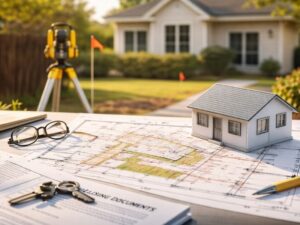
A mortgage closing survey gets ordered. The lender gets what they need. The deal closes.
And the developer walks away thinking the property has been checked.
It hasn’t. Not fully.
A mortgage closing survey serves the lender. It confirms the structure sits on the lot and nothing obvious is wrong. That’s a narrow job. It doesn’t tell a developer what they need to know before building or redeveloping a property.
Here’s what it can miss.
Why Permit Applications Often Trigger a Closer Review of Property Records
The City of Hialeah compares every permit application against official records. The recorded plat, the legal description, setback requirements, and prior permit history all get checked against what the developer submitted.
Discrepancies that nobody caught during closing show up here.
A mortgage closing survey doesn’t cross-reference those records. It documents what exists visually. It doesn’t check whether existing conditions match what the county has on file. It doesn’t flag open permits from prior owners that could block new applications.
So a developer closes without issue, submits plans for a new building, and then learns the recorded plat dimensions don’t match the submitted site plan. Or a prior permit was never finalized and now blocks the new one.
Neither problem appeared in the closing survey. Neither was in scope.
The building department finds them because the permit process is more thorough than a lender’s review.
Catching these gaps requires a current survey prepared for the specific project, not the one ordered to satisfy a lender.
Encroachments That Can Delay Permit Approval
A mortgage closing survey notes visible encroachments. But it doesn’t always document every structure sitting in a required setback or inside a recorded easement corridor.
On older Hialeah properties, these problems are common:
- A concrete pad poured into a side-yard setback by a prior tenant
- A carport that extends past the property line
- A storage structure inside a utility easement
- A driveway that overlaps a neighboring parcel
None of these may have stopped a prior sale. A lender’s closing survey isn’t always detailed enough to catch them. Title insurance doesn’t cover problems a current survey would have found.
When a developer submits plans for new construction, the permit reviewer checks the site plan against recorded setback and easement lines. Every one of those problems becomes visible. The application gets held.
The developer has to resolve the encroachment before work can be approved. That may require a variance, a written agreement with a neighboring owner, or removal of the structure.
None of those happen quickly.
Finding encroachments before the permit application, with a project-specific survey, changes the timing entirely.
Missing Easements and Access Rights That Affect Construction Plans
A mortgage closing survey shows easements that appear in the title commitment. But older easements recorded in deed books before digital records are sometimes missed. A standard closing survey may not plot every easement corridor on the drawing.
This creates real problems for developers planning construction in Hialeah.
Common examples:
- A utility easement crossing the lot under a planned addition
- A drainage easement near a canal that restricts grading
- A shared access agreement that limits where walls or gates can be placed
- A recorded access easement that is still legally active
If a planned structure sits inside an active utility easement, the utility company has the legal right to access that corridor. That right doesn’t go away because a building sits on top of it. The company can require access, which may mean tearing through a finished structure.
A mortgage closing survey doesn’t guarantee all easements have been located. A project-specific survey done to current standards does.
Why Older Property Documents Do Not Always Match Existing Conditions
Decades of changes build up on older commercial properties. Tenants improve spaces. Owners add structures. Drainage gets rerouted. Pavement gets extended. Most of that happens without anyone updating the official records.
By the time a developer buys an older Hialeah property, the recorded site documents may look nothing like what’s on the ground.
A mortgage closing survey documents what exists visually at closing. It doesn’t reconcile what it finds against decades of recorded changes. The survey may show the current fence line but not flag that the fence sits inside a setback that changed when a nearby road was widened.
County records reflect those changes. A permit reviewer checks against them. The mortgage closing survey doesn’t.
This gap is common in older commercial areas in Hialeah where properties have gone through multiple owners and rounds of undocumented improvements.
A developer relying only on the closing survey is working with incomplete information. A current project survey fills that gap before it causes a problem.
Correcting Survey Issues Before Contractors Mobilize Saves Time and Money
Once contractors show up, the cost of a problem changes.
Mobilization fees run whether work proceeds or not. Equipment is on-site. Materials are ordered. Subcontractors are scheduled. A stop-work order puts all of that on pause while the developer works through a fix.
That fix may require a redesign, a variance, or a recorded agreement with an adjacent owner. None of those have fast timelines.
Finding the same issue before the permit application is submitted costs far less. The surveyor documents the conflict. The design team revises the site plan. The application goes in with accurate information.
For developers buying property in Hialeah, the steps that avoid surprises are clear:
- Order a current project-specific survey before drawing site plans
- Compare survey findings against recorded plats, zoning files, and prior permit history
- Find every gap between existing conditions and official records
- Resolve conflicts before the permit application is submitted
A mortgage closing survey is the lender’s document. It protects the loan. A project survey is the developer’s document. It protects the investment.
Relying on the first one to do the job of the second is how developers end up with stop-work orders they didn’t budget for.
Frequently Asked Questions
What does a mortgage closing survey cover?
A closing survey is ordered by a lender. It confirms the structure sits on the correct lot and that no major visible problems exist. It protects the loan, not the buyer’s plans. It does not check for recorded easements, prior permit issues, or gaps between current conditions and county records.
Why isn’t a closing survey enough for a development project?
A closing survey is prepared for a lender’s limited needs. It doesn’t plot every recorded easement. It doesn’t check county records or flag open permits from prior owners. A developer planning new construction needs a current project-specific survey that covers all of those items.
Can a closing survey miss easements that affect construction?
Yes. Older easements recorded before digital indexing can be missed in both title searches and closing surveys. A utility or drainage easement that doesn’t appear on a closing survey can still be legally active. It can block or complicate construction plans. A project survey prepared to current ALTA/NSPS standards is more likely to locate these.
What happens if a closing survey missed an encroachment?
If an encroachment surfaces during permit review, the developer must resolve it before the permit is approved. Fixes include relocating the structure, applying for a variance, or negotiating an easement agreement. Title insurance may not cover losses that a current survey would have revealed at the time of purchase.
How is a project survey different from a closing survey in Florida?
A closing survey satisfies a lender’s requirements at purchase. A project survey is prepared for a specific development use, such as a permit application. It is more detailed and cross-referenced against recorded documents including easements, setbacks, and prior permits. For development work in Hialeah, a project survey is the right tool.
For a free land surveying quote, call us at (305) 912-7795 or send us a message by going here.
Posted in land surveying, land surveyor | Tagged cost of land surveying, estimating the cost of land surveying, land surveying cost, land surveying cost Hialeah