
Average Cost for a Land Survey With an Unopened Right of Way
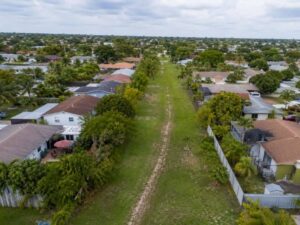
If you’re trying to find the average cost for a land survey and your property sits next to an unopened right of way, the price is not so simple to pin down. An unopened right of way is a street or road that was planned and recorded on paper, but never actually built. No pavement, no curb, nothing you can see. Yet it can still show up on maps and deeds, and it can still affect your property. This guide walks through why that matters, what extra work it can create for a surveyor, and what you should do before asking for a quote.
Why an Unopened Right of Way Can Change the Survey Scope
A normal survey job often has clear physical clues. A paved road tells you where the road is. A fence tells you roughly where a line might be. An unopened right of way gives you none of that.
The surveyor has to figure out where this recorded street actually falls in relation to your parcel, using paper records instead of things they can see on the ground. That’s a different kind of work than measuring a fence line or checking a corner marker. It calls for research first, then field work to confirm what the research suggests.
This isn’t about the general list of things that affect survey pricing, like lot size or terrain. It’s specifically about locating something that exists on paper but not in the real world, and making sure that location lines up correctly with the property being surveyed.
How Record Research Affects the Cost of Surveying an Unopened Right of Way
Before anyone measures anything in the field, a surveyor usually needs to dig through records. Subdivision plats. Deeds. Right of way documents. Sometimes older maps that go back decades.
Here’s the catch. Older records don’t always agree with each other. One document might describe the right of way with different dimensions than another. Some records might be incomplete, missing a page, or hard to read after decades of handling. Untangling all of that takes time, and time is a big part of what drives cost on any survey job.
A property with clean, consistent records is usually quicker to work through. A property with conflicting or old paperwork takes longer, and that extra research hour shows up on the final bill. It’s not extra work for the sake of it. It’s the work needed to get the location right.
Why Missing Street Improvements Can Require More Field Evidence
Since there’s no pavement, curb, or sidewalk to point to, a surveyor can’t just glance at the ground and know where an unopened right of way sits. They have to build the picture from other clues.
That often means locating monuments, which are physical markers set during earlier surveys. It can mean pulling evidence from how neighboring parcels were described and measured. It might involve checking recorded dimensions against what’s actually found in the field, then working out where any gaps or overlaps come from. None of this happens by eye. It takes careful comparison between what the paper says and what the land shows.
This step matters because the whole point of the survey is accuracy. Skipping it, or rushing it, risks marking the right of way in the wrong spot, which can cause real problems for whoever uses that survey later.
What Survey Deliverables May Be Needed When a Right of Way Crosses or Borders a Property
What you actually need from the survey depends on why you’re getting one done in the first place. An owner checking on a piece of land wants something different than a buyer closing on a purchase, and both want something different than a designer planning a new structure.
In many of these cases, the right of way limits need to be shown clearly next to the property boundaries and any existing improvements on the site. If you’re building near that boundary, your architect or engineer needs to see exactly where the recorded right of way sits so the design doesn’t run into trouble later. If you’re buying the property, you’ll want that same information before you close, not after.
Talking through the intended use with the surveyor before the work starts helps make sure the final document actually answers the questions you have, instead of leaving out something you needed.
What to Include When Requesting a Survey Quote for an Unopened Right of Way
A useful quote starts with useful information. Give the surveyor the property address and any parcel details you have on hand. If you’ve got old plats or deeds, share those too, even if they seem outdated or incomplete. Explain why you need the survey done, since that shapes what gets included. And if you know anything at all about the unopened street or right of way, even a rough reference, pass that along.
One thing worth saying plainly: a project-specific quote will serve you far better than chasing some universal average price online. Every parcel with an unopened right of way carries its own record history and its own field conditions, so the number that applies to one property rarely applies to the next.
Frequently Asked Questions
Does an unopened right of way make a land survey more expensive?
It can, when extra record research, boundary work, or field checking is needed. How much it affects the price depends on the specific property and how much clear evidence already exists.
Why can an unopened street still appear on a property survey?
A street or right of way can exist in recorded documents even though it was never built. That recorded location can still matter to the survey, since it affects how the property is legally described.
Can a land survey determine where an unopened right of way is located?
Yes. A surveyor can research the applicable records and gather field evidence to show the relevant right of way limits, as long as the survey is scoped to cover that work.
What records are useful when surveying property next to an unopened right of way?
Recorded plats, deeds, prior surveys, and right of way documents are all useful. They help show how the right of way was originally created and described.
Can I get an exact survey cost before the surveyor reviews the property records?
Usually not a fully accurate one. A solid proposal often needs basic information about the parcel and the recorded right of way first, especially if older or unclear records could change the scope of work.
For a free land surveying quote, call us at (305) 912-7795 or send us a message by going here.
Posted in land surveying | Tagged land surveying