
What a Land Surveyor Records Around Existing Swimming Pools and Decks
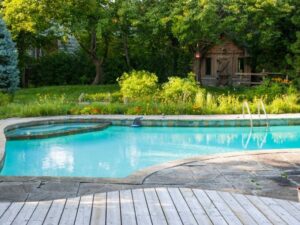 A land surveyor records where every part of the pool area sits today, giving you accurate information before you make your next decision. A backyard pool and deck can hide a lot of history. Decks get extended, fences get moved, equipment pads shift, and sometimes the original pool was set closer to the line than anyone remembers. Those details matter the moment you sell, refinance, or plan a renovation.
Measuring Existing Pool Dimensions and Deck Locations
A land surveyor measures the pool’s outline and position on the lot. That usually means the edge of the water or the coping, which is the cap around the pool’s rim. The shape is drawn to scale, whether it’s a rectangle, a freeform curve, or something in between.
Decks and patios are measured the same way. The survey shows their outer edges, steps, and any raised sections. Wood decks, pavers, and concrete slabs are all recorded so you can see how much of the yard they cover.
These measurements become the base for everything else. They show how the pool area relates to the house, the lot lines, and other features. Ask your surveyor which edges they’ll measure so the drawing matches what you need.
Documenting Distances Between Pool Improvements and Property Boundaries
Distance from the property line is one of the most important details on a pool survey. The surveyor locates the boundary, then measures how far the pool, deck, and other improvements sit from each line. Those numbers show up as dimensions on the drawing.
These distances often matter for setbacks. A setback is the minimum distance a structure must be from a property line. Pools, decks, and screen enclosures may each have different setback rules, depending on the municipality, county, and property type.
The survey also reveals encroachments. An encroachment is any improvement that crosses a property line or sits in an easement. Finding a deck that crosses onto a neighbor’s lot or into a utility easement is far better before a sale or permit than after.
Locating Pool Fences, Equipment Pads, and Nearby Structures
Pool fences and barriers are recorded with their location and gates. Many areas have pool barrier rules, so knowing exactly where the fence sits is useful during inspections or renovations. The survey shows whether the fence follows the property line or sits inside it.
Equipment pads hold pumps, filters, and heaters. They often sit along side or rear lines, where setbacks and easements can be tight. The survey locates the pad and its distance from the boundary.
Nearby structures belong on the drawing too. That can include screen enclosures, cabanas, sheds, outdoor kitchens, and pergolas. Capturing them all gives a full picture of how crowded or open the backyard really is.
Common features recorded around a pool
- Pool edge or coping
- Deck, patio, and paver areas
- Pool fence and gates
- Equipment pad and heater
- Screen enclosures and covered structures
- Nearby sheds, walls, and outdoor kitchens
Recording Deck Elevations and Surrounding Drainage Features
Elevations show how high or low different parts of the pool area sit. A surveyor can record spot elevations on the deck, pool coping, nearby grade, and the house floor. These numbers help explain how water moves across the yard.
Pool decks usually slope slightly away from the pool and the house. If that slope reversed over time, water may pond on the deck or run toward the home. Elevation data shows where these problems are happening.
Drainage features get recorded too. That can include deck drains, yard drains, swales, and downspout outlets. Knowing where they are helps contractors plan repairs or new drainage without guessing.
Using Property Survey Details for Pool Renovations and Site Planning
Survey details give you a clear starting point for renovation planning. If you want to enlarge a deck, resurface the pool, add a spa, or install a new enclosure, you’ll know how much room you have. Contractors and designers can work from real measurements instead of estimates.
Permit offices may ask for a survey showing existing and proposed improvements. What they require can vary by municipality, county, and project type. Confirm requirements early so the survey covers what the reviewer needs.
Survey details also help during sales and refinances. Buyers, lenders, and title companies may want to see whether pool improvements meet setbacks or cross any lines. An updated survey answers those questions before they slow down a closing.
Frequently Asked Questions
What does a land surveyor record around a pool?
A land surveyor records the pool’s shape and location, nearby decks, fences, and equipment pads. They also measure distances to property lines. Elevations and drainage features may be included when requested. The survey shows how the whole pool area fits on the lot.
Do I need a survey to renovate my pool area?
It depends on the project and local rules. Many permit offices ask for a survey when work changes the footprint or adds structures. A survey also helps contractors plan accurately. Check with your permit office before starting.
Can a survey show if my deck crosses the property line?
Yes, the survey locates the boundary and shows whether improvements cross it. It also shows decks or fences that sit in easements. Finding these issues early gives you time to address them. Legal questions should go to your attorney or title company.
For a free land surveying quote, call us at (305) 912-7795 or send us a message by going here.
Posted in land surveying, land surveyor | Tagged land surveying, land surveyor