
What Property Owners Should Know Before Hiring a Boundary Surveyor
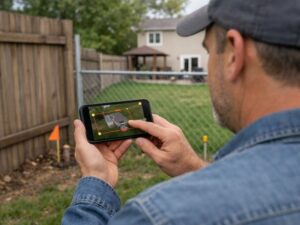
Hiring a boundary surveyor without doing your homework first is one of the most common mistakes property owners and developers make. The survey itself takes days. The fallout from a bad one can take years to fix.
Before you sign anything or hand over a deposit, you need to know what you’re actually buying. A boundary survey is a legal document. It affects permits, closings, neighbor disputes, and resale value. Getting it wrong costs far more than getting it right the first time.
This guide covers what you need to know before the surveyor ever sets foot on your property.
What a Boundary Survey Actually Does
A boundary survey finds and marks the legal edges of your property. That sounds simple. It’s not.
The surveyor pulls your deed, checks neighboring deeds, searches county records, and then physically locates or sets monuments in the ground. Those monuments (iron pins, rebar, concrete posts) represent your legal corners.
The final product is a signed and sealed plat. That document shows:
- Your exact property lines with bearings and distances
- The location of any structures on the lot
- Easements crossing your land
- Any encroachments from neighboring improvements
Banks, title companies, building departments, and courts accept this document. A handshake with a neighbor does not carry the same weight.
Three Things to Gather Before You Call a Boundary Surveyor
The more you bring to the table, the faster and cheaper the survey goes. Don’t wait for the surveyor to ask.
Your current deed. This is the legal description of your property. The surveyor uses it as the starting point for all fieldwork.
Any existing surveys on the property. Prior surveys can cut research time significantly. Even old ones help the surveyor understand how the property has been described over the years.
Neighbor correspondence or dispute records. If there’s been any conflict over a fence line, driveway, or property corner, the surveyor needs to know upfront. Surprises in the field slow everything down.
Questions to Ask Before You Hire
Is the Surveyor Licensed in Your State?
This is non-negotiable. Every state requires land surveyors to be licensed by a professional board. Ask for the license number and verify it yourself through your state’s licensing portal. A sealed survey from an unlicensed individual is worthless.
What Does the Quote Actually Include?
Cheap quotes often exclude the most time-consuming parts. Ask specifically:
- Does this include physical corner monumentation?
- Does the quote include a sealed plat I can record?
- What happens if monuments are missing and need to be re-set?
- Are title research and county record searches included?
Get the scope in writing before any work begins.
How Long Will It Take?
County record searches take time. Dense urban lots with complex ownership histories take longer. A reasonable timeline for a standard residential boundary survey runs between five and ten business days from the authorization date. Rush services exist, but expect to pay more.
What If There’s a Discrepancy?
Deeds sometimes conflict with physical evidence on the ground. Ask the surveyor how they handle this. A competent professional will explain their resolution process clearly. If they can’t, find someone who can.
Red Flags to Watch For
Not every surveying company is worth hiring. Some warning signs are easy to miss.
A quote that seems too low. Corner monumentation, plat preparation, and record research take real hours. A quote significantly below market usually means something is being left out.
No site visit. A boundary survey requires fieldwork. Any quote given without a property visit should raise questions about what’s actually being offered.
Relying only on prior surveys. Prior surveys are useful reference points. They are not a substitute for independent fieldwork. A proper boundary survey goes back to the source documents.
Vague deliverables. You should receive a signed, sealed plat that meets your state’s minimum technical standards. If the surveyor can’t clearly describe what you’ll receive, that’s a problem.
How Local Zoning Rules Interact With Your Boundary Lines
Your deed says one thing. Your local zoning code may say something else.
Setback requirements determine how close you can build to your property lines. These rules vary by zone, lot size, and structure type. A boundary survey tells you where the lines are. Zoning rules tell you how close you can get to them.
Developers often discover that a surveyed lot has less usable buildable area than expected once setbacks are applied. Knowing this before you close saves significant time and money.
Check with the local building or zoning department before you finalize any site plan. Don’t assume the boundary and the buildable area are the same thing.
Frequently Asked Questions
How much does a boundary survey cost?
Costs vary based on lot size, terrain, record complexity, and location. Most residential boundary surveys run between $500 and $1,500. Larger or more complex parcels cost more. Always get a written quote with a clear scope before work begins.
Do I need a new survey if one was done recently?
It depends on what has changed. If structures have been added, boundaries have been disputed, or a lender requires current documentation, a new survey is likely necessary. An existing survey from a prior owner may not reflect current conditions.
Can a boundary surveyor also determine my flood zone?
A boundary surveyor can measure floor elevations and prepare an Elevation Certificate, which is a separate document used for flood insurance. If you need flood zone documentation, ask specifically about this service when you call.
What happens if my neighbor disputes the survey results?
A sealed survey from a licensed professional carries legal weight. If a neighbor disputes the findings, the next step is typically a review by another licensed surveyor or legal counsel. Resolving disputes after a proper survey is far easier than resolving them without one.
How do I verify a surveyor’s license?
Contact your state’s Board of Professional Surveyors and Mappers. Most states maintain a public online database where you can search by name or license number. In Florida, this is handled through the Department of Business and Professional Regulation (DBPR).
For a free land surveying quote, call us at (305) 912-7795 or send us a message by going here.
Posted in land surveying, land surveyor |