
What Is Construction Staking and Why Does It Matter?
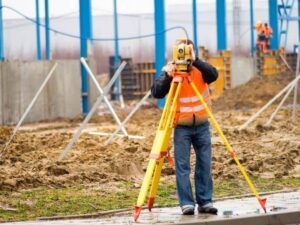 Construction staking is when a licensed land surveyor places physical markers in the ground to show builders exactly where to put a structure. The stakes are based on approved building plans. Without them, a building can end up in the wrong spot and break zoning or property line rules.
What Is Construction Staking?
Construction staking is the process of turning building plans into physical markers on the ground. A licensed land surveyor reads the approved plans and places stakes, pins, or flags at key points across the property. These markers guide the construction crew through every phase of the build.
Think of it as a connect-the-dots guide for builders. The stakes show where the foundation corners go, where roads will be built, where utilities will be buried, and where the finished structure will sit on the land.
Without these markers, a builder is guessing. And guessing on a construction site is very expensive.
How Does Construction Staking Work?
A land surveyor takes the approved building plans and uses GPS tools to find and mark key points on the ground. Each stake is labeled with measurements and elevations. This helps the construction crew know exactly what to do at each spot during every phase of the project.
Here is how the process works, step by step:
Step 1: Review the Plans The surveyor reviews the site plan, grading plan, and other approved documents before visiting the property.
Step 2: Find Reference Points The surveyor finds existing property corners or benchmarks on the site. These are used as the starting points for all measurements.
Step 3: Place the Stakes Using GPS or a total station, the surveyor places stakes at all key construction points. Each stake is marked with a number, elevation, or distance so workers know what to do there.
Step 4: Record the Layout Once all stakes are in place, the surveyor writes up a staking report. This is kept on file by the contractor and may be needed for the building permit.
Why Does Construction Staking Matter?
Even a small placement error can cause a building to break setback rules, sit on the wrong part of the lot, or cross onto a neighbor’s property. Fixing these mistakes after construction starts can cost tens of thousands of dollars. In some cases, part of the structure may need to be torn down.
Here is what can go wrong when staking is skipped or done incorrectly:
- A foundation poured in the wrong spot on the lot
- A structure built too close to the property line, breaking local rules
- A driveway or utility line placed over a recorded easement
- Grading done at the wrong elevation, causing drainage problems
- A building that does not match the approved plan, delaying permits
The National Society of Professional Surveyors (NSPS) reports that construction errors from improper layout are among the most costly mistakes in the building industry. Finding a placement error before concrete is poured costs far less than fixing it after the fact.
Types of Construction Staking
Different parts of a project need different types of staking. Here are the most common ones:
Building Corner Staking. The most common type for home projects. The surveyor marks the exact corners of the building footprint. These stakes guide the digging and foundation crew.
Offset Staking. Surveyors place these stakes a set distance away from the actual corner. This is done because the corner stakes would be destroyed during digging. Workers use the offset stakes to find the exact points again when needed.
Grading Staking. These stakes show how much soil to add or remove at each point to reach the correct finished grade. They guide the grading crew during earthwork.
Utility Staking. These marks show where water lines, sewer pipes, and electrical conduits will go underground.
Road and Curb Staking. Used in subdivision and road projects. These stakes mark the line, grade, and width of roads, curbs, and sidewalks.
Who Needs Construction Staking?
Construction staking is not just for big commercial projects. Many homeowners need it too.
You likely need construction staking if you are:
- Building a new home from the ground up
- Adding a garage, workshop, or other separate structure
- Installing a swimming pool
- Developing a subdivision or multi-lot project
- Building a commercial structure or warehouse
- Putting in a road, parking lot, or large driveway
In many Florida counties, a licensed land surveyor must complete construction staking before a building permit is approved. Always check with your local building department before starting any major project.
When Should Construction Staking Happen?
Construction staking should be done after the site plan is approved but before any ground is broken. Placing stakes too early means they can be knocked over or removed before the crew needs them.
For larger projects, staking is done in stages. Foundation staking comes first. Then grading staking. Then utility staking, as each phase begins.
If stakes are disturbed or removed during the build, the surveyor must come back and replace them before work in that area can continue.
Frequently Asked Questions
Is construction staking required by law?
In many counties, yes. A licensed land surveyor must perform and certify construction staking before a building permit is issued. The exact rules depend on your county and project type. Check with your local building department to be sure.
How long does construction staking take?
For a standard home lot, staking is usually done in one day. Larger or more complex projects may take several days, depending on how many phases are involved.
What is the difference between construction staking and a boundary survey?
A boundary survey finds where your property lines are. Construction staking uses those lines as a starting point to mark where your building, utilities, and grading will go, based on the approved plans.
What happens if construction stakes are moved or removed?
The surveyor must come back and replace them before work in that area can continue. Building from missing or wrong stakes leads to serious and costly mistakes.
Can a contractor do their own staking?
In Florida, only a licensed Professional Land Surveyor (PLS) can certify construction staking for permitted projects. A contractor who does their own layout may not meet local building code rules.
For a free land surveying quote, call us at (305) 912-7795 or send us a message by going here.
Posted in land surveying, land surveyor |